
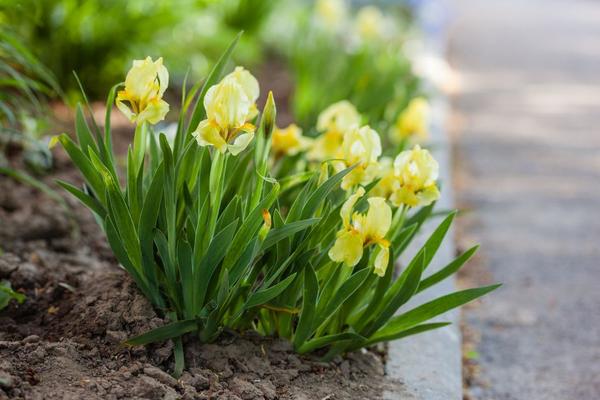
A flower border can look full of promise at the nursery and strangely uneven by midsummer. Usually, the problem is not the flowers themselves. It is where they sit, how wide they become, and whether their best weeks overlap. Choosing flowers for garden borders works better when you plan the view first and shop for individual plants second.
Start With the Site, Not the Shopping List
Stand where you will see the border most often. A bed against a fence is viewed from one side; an island bed needs to work from several directions. Measure its length and depth, then note the hours of direct summer sun, soil drainage, and exposure to wind.
Match plants to these conditions before choosing colors. Lavender and many salvias favor sun and well-drained ground; astilbe generally prefers more moisture and some shade. A combination that looks beautiful on paper will struggle if its plants require opposite conditions. For narrow beds, choose fewer species with modest mature widths.
Layer Border Flowers by Mature Height
Use taller plants as a loose backdrop
Place most substantial, tall flowering border plants at the rear of a one-sided bed, or nearer the center of an island. Depending on cultivar and climate, upright asters, coneflowers, and tall garden phlox can provide structure. Check their mature height and spread: plants with the same common name can grow to very different sizes.
Leave space beside windows and walkway corners so tall stems do not block a view. Not every tall plant needs to be hidden at the back, though. Fine, airy stems can appear farther forward without forming a solid screen.
Make the middle layer do the connecting
Hardy geraniums, catmint, coreopsis, and compact salvias can connect upright stems with low flowers for edging beds. Choose cultivars that suit the local climate. Repeat one middle-height plant in several places so the border stays cohesive even as neighboring flowers come and go.
Keep edging low, but allow room to spread
Compact sweet alyssum, dianthus, and suitable creeping phlox varieties can soften the edge where growing conditions fit. Some offer a brief flush of bloom, while others flower longer or retain useful foliage. Leave space for their mature spread so they do not overrun a path.
Create Rhythm With Repeated Groups
One of every attractive plant can make a long border look disconnected. Instead, place selected flowering border plants in small groups and repeat those groups along the bed. A repeated shape or color links sections without making them identical. Let spacing depend on mature plant width, not a fixed number of plants per group.
Contrast flower forms, too. Upright salvia spikes beside rounded coneflower heads create interest even when both bloom in similar colors. An occasional airy cosmos plant can loosen a formal arrangement.
Stagger Blooms Across the Growing Season
Garden centers often display plants at their peak, tempting you to buy everything flowering that week. Instead, make a simple calendar and note each plant’s usual bloom window in your region. Weather and cultivar can shift flowering dates, so allow overlap.
Spring
Early bulbs and spring perennials can start the show before summer plants fill out. Creeping phlox offers spring color in sunny, well-drained sites. Place later-emerging perennials nearby so new foliage gradually draws attention away from fading bulb leaves.
Summer
Depending on variety and climate, coreopsis, hardy geraniums, salvias, and coneflowers can contribute through summer. Annuals such as zinnias and cosmos may fill gaps in sunny beds during the frost-free season. Deadheading encourages additional flowers in some plants, but not all varieties reliably rebloom.
Late summer and fall
Suitable asters and sedums, many now classified as Hylotelephium, can extend the display. Seed heads and foliage also provide texture after petals fade. For layered flower borders, aim to have several different plants contributing in each season rather than relying on one star performer.
Balance Color With Foliage and Flower Shape
Start with a limited palette rather than choosing each flower independently. Purple and blue alongside pale yellow can feel restful; warm oranges and reds bring energy. Repeat one or two colors across the bed to connect its sections.
Remember the weeks between blooms. Silver leaves, green mounds, and burgundy foliage maintain the composition while flowers rest. White blooms can lift a dark-looking corner, provided the actual plant tolerates its light conditions. A separate guide to flower bed color combinations can help refine your palette.
A Practical Planting Plan for a Sunny Border
Picture a border 12 feet long and 4 feet deep against a fence, receiving at least six hours of direct summer sun with freely draining soil. Divide its length visually into three loosely repeating sections rather than planting twelve unrelated favorites.
Use appropriately sized coneflowers or upright salvia cultivars as taller accents, catmint or coreopsis through the middle, and compact dianthus near the front. Insert small patches of zinnias or cosmos for seasonal color where the frost-free period is long enough. Repeat a few plants, but offset the groups slightly so they do not resemble rigid stripes.
Sketch each mature plant spread as a circle on graph paper. Leave access for maintenance and check every cultivar’s needs before buying. A guide to measuring and spacing flower beds can help turn this starting arrangement into a precise plan.
Plant for Next Year’s Size
Set plants in their pots on prepared ground before digging, then inspect the arrangement from the path or patio. Remove perennial weeds and improve the soil where needed; avoid automatically adding rich compost to species that prefer lean conditions.
Water plants well during establishment, apply suitable mulch without burying crowns, and expect many perennials to take time to fill out. Annuals can add temporary color. Photograph the border in spring, midsummer, and fall to spot gaps and overcrowding before making changes. For simpler upkeep, see our guide to low-maintenance perennial flowers.
Frequently Asked Questions
What are good flowers for garden borders?
In suitable sunny, well-drained sites, consider catmint, salvia, coreopsis, and coneflowers. In moister partial shade, investigate astilbe and appropriate hardy geraniums. The best choice depends on climate, soil, exposure, and cultivar.
Do taller flowers always belong at the back?
No. Most bulky plants belong behind shorter ones in a one-sided border, but transparent stems can sit farther forward. Island beds usually place taller masses near the center.
How many varieties should a border contain?
There is no universal number. A manageable selection repeated in groups often looks better than numerous isolated specimens. Base the quantity on bed dimensions and mature plant sizes.
How can I keep border flowers blooming longer?
Combine early-, mid-, and late-season varieties, use annuals to bridge gaps, and deadhead plants that benefit from it. Expect bloom times to vary with local weather.
Let the Border Grow Into Its Design
The most satisfying borders balance today’s display with tomorrow’s growth. Choose plants suited to the site, arrange them by mature size, repeat a few colors, and give flowering seasons room to overlap. Leave space for plants to develop, then edit what needs adjusting after a full growing season.