
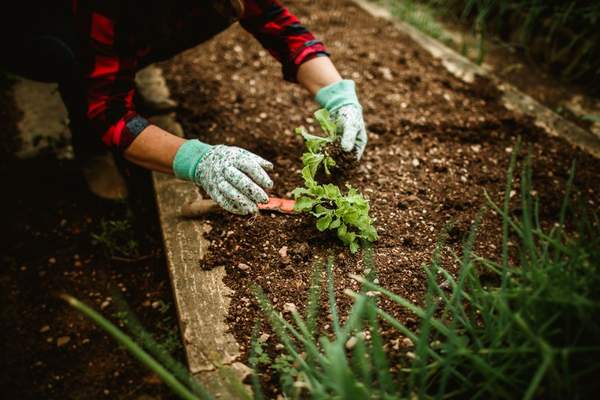
A productive vegetable bed does not have to begin with a spade, rotavator, or a weekend of turning heavy soil. The no-dig vegetable garden method starts from a different idea: disturb the soil as little as possible, keep it covered, and add organic matter at the surface. Earthworms, fungi, microbes, roots, and weather then do much of the mixing for you.
The approach fits the wider move toward regenerative gardening: protect soil structure, reduce unnecessary work, and keep beds productive without repeated cultivation.
What No-Dig Gardening Actually Means
In a no-dig bed, you avoid routinely turning or tilling the whole growing area. Instead, compost or another well-rotted organic material is spread over the surface. Crops are sown or planted into that top layer, while roots grow down into the soil beneath.
Small planting holes are completely compatible with the method. You can use a trowel to set out seedlings, plant potatoes individually, or remove a stubborn perennial weed. The goal is not zero soil movement; it is to avoid repeated, broad cultivation that breaks apart the soil profile.
No-till gardening for beginners needs no special machinery. The essentials are a defined bed, suitable compost or mulch, and paths that let you reach crops without walking on the growing surface.
Why Leaving Soil Undisturbed Can Help
Soil contains pores, aggregates, root channels, fungi, bacteria, worms, and other organisms. Frequent cultivation can disrupt those structures. Reducing disturbance helps preserve natural channels for air and water while surface organic matter gradually feeds the soil community.
Mulch also shields bare ground from heavy rain and slows moisture loss in dry spells. Weed pressure may decline because buried weed seeds are not continually brought to the surface, although no-dig does not make a garden weed-free. Persistent weeds still need attention.
Think of soil health without tilling as a long-term process. One layer of compost will not transform poor ground overnight; repeated surface applications and minimal compaction gradually improve conditions.
How to Start a No-Dig Vegetable Bed
Choose a Bed You Can Reach Easily
A width of roughly 1.2 metres works well for many gardeners because the centre can be reached from both sides. Keep paths separate from the growing area. This helps prevent compaction and is one reason no-dig beds can become a low-maintenance vegetable garden over time.
Deal With Existing Grass and Weeds
If you are converting lawn or a weedy patch, cut down tall growth first. Cover the surface with overlapping sheets of plain brown cardboard, removing tape and staples. Wet the cardboard so it sits closely against the ground. Avoid making the barrier excessively thick, as water and air still need to move through the developing bed.
Cardboard is most useful when you need to smother existing vegetation. On an established, relatively clean vegetable bed, it is usually unnecessary; you can place compost directly on the soil. Tough perennial weeds may reappear, so remove regrowth promptly.
Add a Generous Layer of Organic Matter
Cover the surface with well-rotted garden compost, mature manure, or another suitable composted soil improver. For a newly created bed over grass or weeds, a layer around 10 to 15 centimetres deep gives plants a useful rooting zone while the material below breaks down. If planting immediately, use finished material rather than fresh, hot manure.
Established beds generally need less material each year. A surface dressing of compost replenishes organic matter. Learning how to make garden compost can also reduce reliance on bagged materials.
Plant Into the Surface
Transplants are especially convenient in a new no-dig bed. Make a small hole, set the plant at the correct depth, firm the compost around it, and water well. Direct sowing is also possible when the upper layer is fine and mature enough for good seed contact.
For example, imagine converting a 1.2-by-2.4-metre patch of lawn into a spring bed. Lay wetted overlapping cardboard, add about 10 centimetres of mature compost, then plant module-raised lettuce, chard, spring onions, and courgettes. You can start cropping from the new surface while the grass beneath is being smothered. A seed-starting indoors guide can help if you want sturdy transplants ready for the new bed.
No-Dig and Lasagna Gardening Are Related, Not Identical
The lasagna gardening method is often discussed alongside no-dig, but the terms are not exact synonyms. A simple no-dig bed may be soil covered with compost. Lasagna gardening usually builds a deeper stack of alternating carbon-rich and nitrogen-rich materials, such as leaves, straw, grass clippings, compost, and other compostables.
Both methods minimise digging, but lasagna beds can need more time to decompose. For immediate planting, a finished compost layer is usually more predictable than partly decomposed material.
How to Maintain the Bed
Once established, maintenance is straightforward. Add mature compost to the surface periodically, remove weeds while they are small, keep paths clear, and avoid walking on the bed. Mulched soil may retain moisture better, but crops still need watering during dry weather, particularly while seedlings are establishing.
You can harvest and replant without turning the bed over. After lettuce finishes, clear the crop residue, level the surface lightly if needed, and plant the next crop. Planning vegetable crop rotation can also help manage crop families and recurring pest or disease problems without changing the no-dig approach.
Adapt the method to your site. Poorly drained ground may benefit from raised edges, while sandy soil may need regular organic matter to improve water-holding capacity.
Frequently Asked Questions
Can I start no-dig gardening on compacted soil?
Usually, yes. Avoid automatically digging the whole area. Add organic matter and minimise traffic. If the ground is severely compacted, gentle loosening with a fork without turning the soil can be a practical compromise.
Do I have to use cardboard?
No. Cardboard is mainly a temporary weed-smothering layer for grass or weedy ground. If your bed is already reasonably weed-free, apply mature compost directly to the surface.
Can I sow seeds directly into a no-dig bed?
Yes, provided the surface layer is mature, fine enough, and moist enough for good seed contact. Very coarse or unfinished compost is better suited as a mulch around established plants.
Will a no-dig garden need fertiliser?
That depends on the soil, compost, and crops. Regular additions of nutrient-rich compost can supply much of what many vegetables need, but demanding crops or diagnosed deficiencies may still require targeted feeding. A soil test is more useful than assuming every bed needs extra fertiliser.
A Simpler Way to Build Better Soil
No-dig gardening replaces repeated soil turning with a calmer routine: cover the ground, feed it from the surface, plant into the upper layer, and let roots and soil organisms do much of the work. The method can reduce bed-preparation labour while supporting better structure, moisture management, and gradual organic-matter improvement.
Start with one manageable bed rather than converting the entire garden at once. After a season of planting, harvesting, mulching, and observing the soil, you will have a clearer sense of how no-dig fits your site. The real advantage is not that you never touch a spade again; it is that digging stops being the default answer to every soil problem.