
By late summer, a garden can look as though its best days are behind it. Coneflowers are setting seed, early perennials are fading, and empty patches show between tired annuals. A few well-chosen fall-blooming flowers can carry the border from September toward the first hard freeze, often while feeding pollinators that still need nectar.
The trick is to plan successive waves of color rather than buy one impressive pot of chrysanthemums. Match plants to the light, choose varieties that bloom before your local frost date, and leave room for their mature size.
Best Fall-Blooming Flowers for Sunny Beds
New England and Other Native Asters
Asters bring lavender, purple, pink, or white daisylike flowers when summer plants finish. New England aster suits the back of a border; compact aromatic aster and shorter cultivars can edge paths. Most flower best in full sun with well-drained soil. Allow airflow around foliage where powdery mildew is common. Locally suitable native species offer valuable late nectar to bees and butterflies.
Goldenrod
Goldenrod adds warm yellow plumes beside purple asters. Several Solidago species are native across North America, but their height, moisture needs, and spreading habits vary. For a small bed, choose a compact selection rather than assuming every goldenrod stays tidy.
Goldenrod is blamed for hay fever, but its heavy pollen is mainly carried by insects; wind-pollinated ragweed flowering at the same time is often the bigger culprit.
Hardy Garden Chrysanthemums
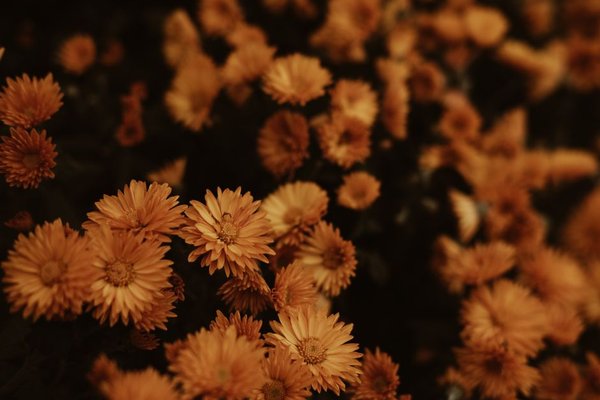
Garden mums deliver cushions of rust, gold, burgundy, pink, or cream. They make a dramatic autumn display, but a supermarket pot sold in full bloom is not automatically winter-hardy. Look for named selections suited to your USDA zone and plant them in spring when possible, allowing roots to establish before cold weather.
Give mums full sun and good drainage. Flowering responds to shortening days, so bright nighttime lighting can disrupt bud formation in some varieties.
Autumn Joy-Type Stonecrop
Upright stonecrop, often sold as ‘Autumn Joy’ sedum, carries flower heads that shift from rosy pink to coppery brown. It prefers sun and free-draining soil; rich soil or excessive fertilizer can make stems flop. Its dried heads remain attractive through winter, bridging autumn flowers and winter texture.
Sneezeweed and Late Black-Eyed Susans
Helenium, known as sneezeweed, carries copper, orange, and yellow flowers in late summer and early fall. Unlike drought-tolerant stonecrop, it generally appreciates consistently moist soil. Some black-eyed Susan varieties also bloom into autumn. Check the cultivar’s flowering window rather than relying on its common name.
Autumn Flowers for Partial Shade
Japanese Anemones
Japanese anemones lift pink or white flowers above leafy mounds, bringing movement to borders with morning sun or light afternoon shade. They prefer fertile, well-drained soil with steady moisture and may spread once established. Give them room to form a colony, not a cramped spot beside delicate neighbors.
Toad Lilies
Toad lilies offer small, orchidlike blossoms, often speckled purple. Plant them beside a path or seating area where their detail can be appreciated. They prefer humus-rich soil, consistent moisture, and protection from harsh afternoon sun. Bloom timing varies by species and climate.
Quick Color for Containers and Bare Spaces
Not every display needs years to establish. Pansies and violas handle cool weather and can refresh porch planters or bed edges. Ornamental kale supplies foliage color rather than true flower color, while mums provide a seasonal focal point. Some containers continue blooming through mild winters; sustained freezing weather ends most displays farther north.
For a doorway arrangement, combine a compact purple aster, two yellow violas, and a trailing plant in a wide pot with drainage holes. Water whenever the root zone begins to dry, without leaving the pot standing in water. Move hardy perennials into the garden while soil remains workable.
Plan a Bloom Sequence Around Your First Frost
A plant labeled ‘fall blooming’ may flower too late for a northern garden. Check its local flowering window, then work backward from your area’s typical first frost. Early mums and late rudbeckias start the transition; asters, goldenrod, and suitable anemones can follow. Timing varies by cultivar, weather, and latitude.
Imagine a sunny border that looks empty after July. Instead of planting five identical mums, place upright stonecrops near the front, compact asters in the middle, and goldenrod behind them. Stonecrop develops color first, while asters and goldenrod build a later peak. This staggered planting keeps flowers for fall color visible over more weeks.
Pair Color With Shape, Not Just More Flowers
Purple asters beside goldenrod create crisp contrast. Copper chrysanthemums look softer next to burgundy foliage, while white Japanese anemones brighten a shaded edge. Repeat one color in several places so the display feels deliberate, not like an assortment of unrelated pots.
Ornamental grasses make a useful backdrop when their seed heads catch low autumn light. Explore perennial flower bed design and flowers that attract pollinators for related planting combinations. Pair plants with compatible moisture needs rather than placing moisture-loving sneezeweed beside drought-loving stonecrop.
Plant and Care for a Longer Show
Spring or early fall, with sufficient unfrozen time for root growth, is generally better than very late fall for establishing hardy perennials. Water new plants when soil begins to dry, mulch without burying crowns, and avoid heavy late-season nitrogen feeding. Respect mature spacing: crowded stems hide flowers and invite disease.
Remove spent blooms from annuals and selected perennials where it encourages fresh buds, but leave some seed heads for wildlife. If pinching mums or asters to encourage branching, stop early enough to preserve developing flower buds. A fall garden maintenance checklist can help prioritize watering, container protection, and winter cleanup.
When a brief frost threatens, moving portable pots under cover or using suitable frost cloth may preserve a tender display. Neither tactic can defeat a sustained hard freeze.
Frequently Asked Questions
What flowers bloom latest in fall?
Late asters and chrysanthemums, along with some Japanese anemones, may bloom near frost. The last flowers depend on climate and cultivar, not simply the plant’s common name.
Are fall perennial flowers planted in spring or autumn?
Many establish best in spring, especially hardy mums in colder areas. Early fall planting can work if roots have time to settle before the ground freezes. Avoid frozen or waterlogged soil.
Which fall flowers grow in shade?
Japanese anemones and toad lilies suit partial shade. Deep, dry shade is harder; even shade-tolerant flowering plants need adequate moisture and some light.
How do I keep autumn flowers blooming longer?
Choose staggered bloom times, water during droughts, remove spent flowers when useful, and protect pots from brief cold snaps. No maintenance trick overrides a natural bloom cycle or a hard freeze.
A Border That Finishes Strong
The best fall garden does not suddenly turn colorful in October. It makes a smooth handoff from summer to autumn. Start with reliable late blooming flowers matched to your conditions, mix contrasting shapes, and plan around frost. Your garden can still feel alive as the rest of the landscape begins to rest.