
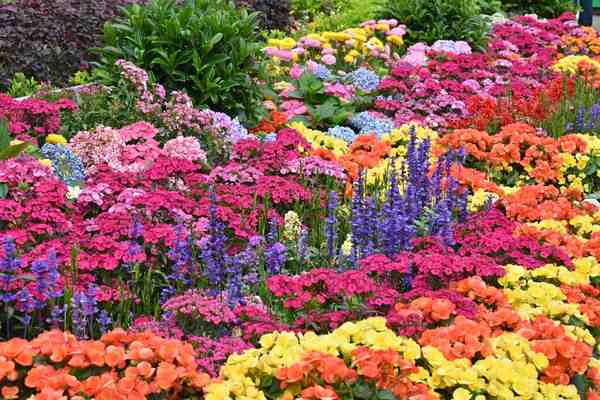
Choosing between annuals and perennials is less about finding a “better” flower and more about deciding how you want a flower bed to behave. Annuals give fast color and freedom to redesign each season, while perennials create a longer-term framework that can return for years. For many gardens, the most practical answer is a deliberate mix of both.
Annuals vs Perennials: The Main Difference
Annuals complete their life cycle in one growing season. They sprout, flower, set seed, and die, usually within the same year. Marigolds, zinnias, petunias, cosmos, and many bedding begonias are familiar examples. Because they put so much energy into one season, many annuals flower heavily for months when they receive suitable light, water, and feeding.
Perennials live for more than two years and can return from established roots, crowns, bulbs, or other underground structures. Depending on climate, examples include coneflowers, daylilies, hostas, salvias, coreopsis, and peonies. Their top growth may die back during winter or dormancy, then reappear when conditions improve.
Climate can blur the line. A plant that survives as a perennial in a warm region may be grown as an annual where winter temperatures are too low. Local growing conditions therefore matter as much as the plant label.
Which Gives More Seasonal Color?
If your priority is immediate, long-lasting impact, annuals often have the advantage. Many are bred to keep flowering for an extended period, especially when faded blooms are removed or the variety is self-cleaning. They work well near entrances, patios, paths, and other places where continuous color matters.
Perennials usually have a more defined flowering window. One may bloom in spring, another in early summer, and another late in the season. A perennial bed can still stay colorful for months, but it requires thoughtful selection so different plants take turns blooming.
A useful approach is to treat perennials as the calendar and annuals as the gap-fillers. Choose perennials with staggered bloom times, then add annuals wherever the bed looks quiet between peak periods.
Cost: Look Beyond the First Purchase
Annuals are often inexpensive to buy individually, but they normally need replacing each growing season. Filling a large bed with new plants every year can add up. Perennials may cost more at first, yet established plants can return for several years, and some can eventually be divided to create additional plants.
The calculation changes if you grow annuals from seed. A packet of zinnias, cosmos, or marigolds can cover a generous area for little money. For gardeners comfortable sowing and thinning seedlings, annuals can be one of the most affordable ways to create a large display.
Maintenance Is Different, Not Automatically Lower
Annual flower bed plants may need regular watering while establishing, occasional feeding, and sometimes deadheading to keep blooms coming. At the end of the season, they are usually removed or allowed to finish and self-seed where appropriate.
Perennials reduce annual replanting, but they are not maintenance-free. Depending on the species, they may need cutting back, dividing, staking, mulching, or thinning. Mature clumps can also spread farther than expected.
If you enjoy changing the look of your garden frequently, annual maintenance may feel worthwhile. If you prefer improving the same planting over several years, perennial care may suit you better.
Climate and Site Conditions Should Guide the Choice
The words annual and perennial do not tell you whether a plant will succeed in a particular bed. Sun exposure, soil drainage, heat, rainfall, winter temperatures, and irrigation matter more. A shade-loving perennial will struggle in a hot exposed border just as a sun-loving annual may perform poorly in deep shade.
For perennials, check whether the plant tolerates your local winter and summer conditions. For annuals, consider whether the species prefers cool or warm weather. Pansies often perform best in cooler periods, while zinnias prefer warm, sunny conditions.
Before buying either type, observe the bed for a full day if possible. Note how many hours of direct sun it receives and whether water drains quickly after rain. That simple check prevents more problems than choosing plants by flower color alone.
Design Flexibility: Fast Change vs Long-Term Structure
Annuals are ideal if you enjoy experimenting. You can switch color schemes from one year to the next without removing established plants. They are also useful in temporary beds, new gardens where the long-term plan is still developing, and gaps between young perennials.
Perennials create continuity. Their repeated return helps establish height, texture, rhythm, and dependable structure. A well-placed clump of salvia or coneflower can become an anchor while the surrounding annuals change from season to season.
A Practical Mixed-Bed Example
Imagine a sunny bed along a front walkway. Start with three groups of perennials suited to your climate, such as spring-flowering salvia, summer coneflowers, and late-season asters. Leave intentional pockets between them and fill those spaces with marigolds or zinnias for extra color during the first season.
As the perennials grow wider in later years, reduce the number of annuals. This keeps the bed looking full while young plants mature and prevents overcrowding later. It is a simple way to balance short-term appearance with long-term value.
When Annuals Make the Most Sense
Choose mostly annuals when you want maximum seasonal color, expect to redesign frequently, enjoy growing flowers from seed, or need fast results while a new landscape develops. They are especially useful when flexibility matters more than permanence.
When Perennials Make the Most Sense
Choose mostly perennials when you want a bed that develops over several years, prefer maintaining established plants instead of replacing everything, or want reliable shapes and heights to return in roughly the same locations.
FAQ
Are perennials better than annuals for flower beds?
Not universally. Perennials are better for long-term structure and repeat performance, while annuals are better for rapid color and seasonal flexibility. The right choice depends on budget, climate, maintenance preferences, and how often you want to redesign.
Do annuals bloom longer than perennials?
Many annuals bloom for a longer continuous period because they complete their life cycle in one season. Individual perennials often bloom for a shorter window, although combining several perennial species with different bloom times can extend seasonal color.
Can annuals and perennials be planted together?
Yes. Mixing them is often one of the most effective approaches. Perennials provide the permanent framework, while annuals fill gaps, add long-lasting color, and let you change the appearance from year to year.
Which is cheaper: annuals or perennials?
Annuals can cost less initially, especially from seed, but replacing them every year adds recurring expense. Perennials often cost more at first but can provide better long-term value because they return for multiple seasons.
Choosing the Right Mix
For most flower beds, the best decision is based on function rather than labels. Use annuals where you want immediate impact, experimentation, and extended seasonal color. Use perennials where you want structure, repeat growth, and a planting that becomes more established over time. Match every plant to the bed’s light, drainage, and climate first, then decide how much change you want from one year to the next. A thoughtful combination usually gives you the color of annuals without sacrificing the staying power of perennials.