
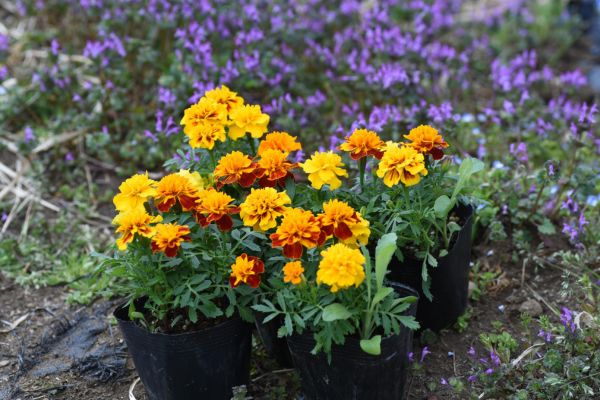
Gardens have always been quiet experiments in balance. Even the most carefully planned plot becomes a living conversation between soil, weather, insects, and plants themselves. Somewhere along the way, many gardeners discover a simple but surprisingly effective idea: certain plants grow better together. Not just for growth or flavor, but for protection. That’s where companion planting pest control begins to feel less like a technique and more like a quiet strategy rooted in observation.
The Natural Logic Behind Companion Planting
If you step back and watch a wild landscape, you’ll notice that plants rarely grow in isolation. Diversity is the rule, not the exception. Companion planting pest control borrows from this natural arrangement, placing specific plants near each other to create a small ecosystem where pests are discouraged—or at least kept in check.
The idea is simple, but the reasoning runs deeper. Some plants emit scents that repel insects. Others attract beneficial predators that feed on harmful pests. A few even act as decoys, drawing pests away from more valuable crops. Instead of relying on sprays or interventions, the garden becomes self-regulating.
It’s not a perfect system, and it doesn’t eliminate every problem. But it shifts the focus from reaction to prevention, which is often where real gardening wisdom lives.
How Plants Influence Each Other
Companion planting pest control works through a mix of chemical signals, visual confusion, and ecological relationships. It might sound technical, but in practice, it’s intuitive.
Certain plants release volatile compounds into the air. These scents can mask the smell of nearby crops, making it harder for pests to locate their target. This is why strongly scented herbs often play a central role in companion planting.
Then there’s visual disruption. Many insects are surprisingly specific in what they look for. A neat row of identical plants becomes an easy target. Break that pattern with mixed planting, and suddenly the garden feels less predictable to pests.
Finally, there’s the role of beneficial insects. Not all bugs are the enemy. Ladybirds, lacewings, and parasitic wasps are natural predators. Companion planting pest control often involves inviting these allies into the garden by offering them nectar, shelter, or simply a place to land.
Classic Plant Pairings That Keep Pests Away
Some plant combinations have stood the test of time, passed down through generations of gardeners who noticed what worked.
Tomatoes and basil are perhaps the most well-known pair. Basil’s strong aroma can help deter pests like aphids and whiteflies, while also enhancing the growing environment around tomatoes. Whether that improvement is chemical or simply coincidental is still debated, but the pairing persists for good reason.
Carrots and onions offer another practical example. The scent of onions can confuse carrot flies, while carrots don’t interfere with onion growth. It’s a quiet partnership that benefits both.
Cabbage family plants, including broccoli and kale, often struggle with caterpillars. Planting them near herbs like dill or thyme can attract beneficial insects that feed on those pests. It doesn’t eliminate the problem entirely, but it reduces the pressure.
Then there are trap plants like nasturtiums. These bright, fast-growing flowers tend to attract aphids away from vegetables. In a way, they sacrifice themselves for the rest of the garden. It’s a small trade-off that many gardeners are happy to make.
The Role of Herbs in Pest Control
Herbs are often the backbone of companion planting pest control. Not because they’re magical, but because they’re intensely aromatic and versatile.
Mint, for instance, can repel ants and certain beetles, though it has a habit of spreading aggressively if left unchecked. Lavender, with its soft purple blooms, discourages moths and flies while attracting pollinators. Rosemary and sage bring similar benefits, creating a fragrant barrier around more vulnerable plants.
What’s interesting is how these herbs serve multiple roles. They protect, yes, but they also contribute to the overall health of the garden. They attract pollinators, improve biodiversity, and even offer culinary value. It’s a reminder that in gardening, efficiency often comes from overlap rather than specialization.
Creating Diversity Instead of Uniformity
There’s a certain aesthetic appeal to neat rows and perfectly spaced crops. But from a pest’s perspective, that kind of uniformity is an invitation.
Companion planting pest control encourages a more relaxed approach. Instead of grouping identical plants together, the idea is to mix them—vegetables with herbs, flowers with leafy greens, tall plants with ground cover. The result might look less structured, but it’s often more resilient.
This diversity creates confusion for pests and stability for the garden. If one plant struggles, another might thrive. If a pest arrives, it doesn’t find an easy path through the entire space. Over time, the garden begins to feel less like a collection of individual plants and more like a connected system.
Understanding the Limits of Companion Planting
It’s tempting to think of companion planting pest control as a complete solution. In reality, it’s one tool among many.
Severe infestations can still occur, especially in environments where pests are already established. Weather conditions, soil quality, and plant health all play significant roles. Companion planting works best as part of a broader approach that includes good soil management, proper spacing, and regular observation.
There’s also an element of experimentation. What works in one garden might not translate perfectly to another. Climate, local insect populations, and even subtle differences in soil can influence results. That unpredictability isn’t a flaw—it’s part of what makes gardening an ongoing learning process.
Seasonal Awareness and Timing
Timing matters more than it might seem. Planting companions at the right moment ensures they’re active when pests arrive.
For example, fast-growing herbs can be established early in the season to provide protection as vegetables begin to develop. Flowers that attract beneficial insects should bloom at the same time pests are most active. It’s a matter of aligning cycles rather than forcing outcomes.
This seasonal awareness adds another layer to companion planting pest control. It’s not just about what you plant, but when you plant it. And that timing often comes from paying attention rather than following strict rules.
Observing and Adapting Over Time
One of the most valuable aspects of companion planting is how it encourages observation. Instead of reacting to problems after they appear, gardeners begin to notice patterns.
Which plants seem untouched by pests? Where do insects tend to gather? How do different combinations affect growth and health? These small observations build into a deeper understanding over time.
Companion planting pest control isn’t static. It evolves with each season, shaped by experience and curiosity. What starts as a simple pairing—tomatoes and basil, for instance—can lead to more complex arrangements as confidence grows.
A Garden That Works With Nature
At its core, companion planting pest control reflects a shift in mindset. Rather than trying to dominate the garden, it invites cooperation. Plants support each other. Insects play both harmful and helpful roles. The gardener becomes less of a controller and more of a participant.
There’s something quietly satisfying about that approach. It doesn’t promise perfection, and it doesn’t eliminate every challenge. But it creates a garden that feels alive in a balanced way, where solutions emerge from relationships rather than interventions.
Conclusion: Finding Balance Through Companion Planting
Companion planting pest control isn’t a rigid system or a guaranteed fix. It’s a thoughtful way of arranging plants so they can support each other, reducing pest problems through natural interactions. Along the way, it encourages diversity, observation, and a deeper connection to the garden itself.
The real value lies in that shift—from managing problems to anticipating them, from isolated planting to interconnected growth. Over time, those small changes add up, shaping a garden that feels more resilient, more dynamic, and perhaps a little more in tune with the rhythms that have always been there.